
ARTEphemeral in School Education
Arte Efímero en la Educación Escolar
A methodological guide for teachers: creativity, ephemeral art, technology and inclusion through collaborative educational activities.
AIDE Social · AIDE Formación
Intervención Socioeducativa · Proyectos Europeos
Executive summary
Between 2021 and 2023, AIDEJOVEN coordinated six organisations from Spain, Italy, Slovenia and Turkey to bring ephemeral art into schools. The project combined teacher training, digital tools, the creation of artworks by pupils and meetings to share results, with a methodological guide as a resource for schools.
ARTephemeral in School Education utilizó el arte efímero como herramienta de inclusión, aprendizaje y expresión emocional. Las creaciones artísticas permitieron al alumnado comunicar cómo había vivido la pandemia y trabajar competencias personales, sociales, digitales y emprendedoras desde distintas asignaturas.
El recorrido unió formación del profesorado y creación artística en las aulas. En Maribor se trabajaron Canva, Tinkercad y propuestas como la construcción del Faro de Alejandría. Después, los docentes desarrollaron proyectos con sus estudiantes durante cuatro meses, que culminaron en exposiciones y presentaciones de las obras.
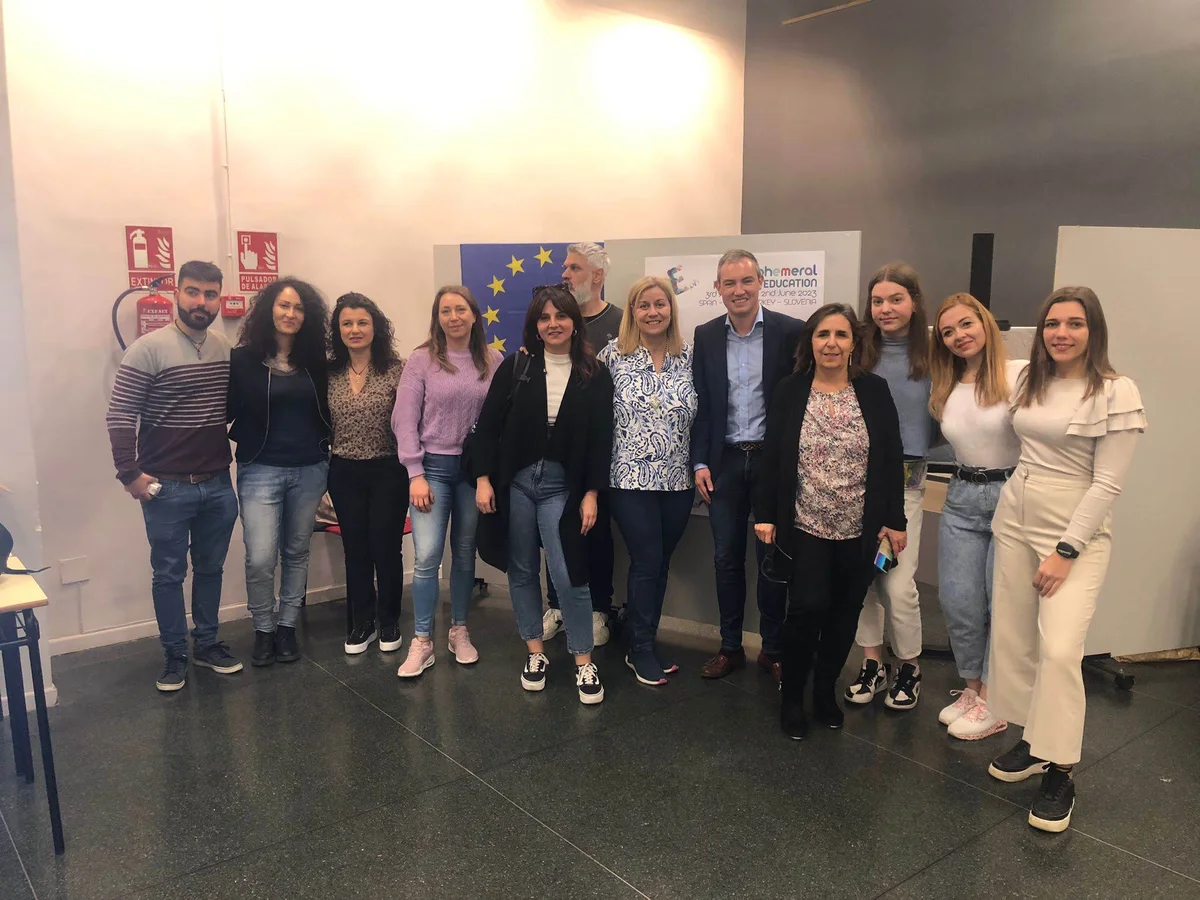
Los resultados se compartieron en el encuentro final del 15 de marzo de 2023 en Torrejón de Ardoz, con profesorado y alumnado de los centros participantes. La experiencia quedó recogida en una guía metodológica disponible en cinco idiomas, para que otros equipos docentes puedan aplicar el arte efímero en su práctica educativa.
School students and teachers, especially students with fewer opportunities for participation and inclusion. The training brought together teachers from different subjects — art, mathematics, IT, physical education, language and literature — and the school activities also involved families and the wider school community.
From 9 to 12 March 2022, EPEKA hosted a training session in Maribor, Slovenia, attended by all six project organisations. Teachers explored ephemeral art as a methodology for developing key competences, practised design with Canva and 3D modelling with Tinkercad, prepared proposals for their classrooms and shared ideas across different specialisms. The activity included a visit to a school and an evaluation of the tools used.
Using a text describing the lighthouse as a starting point, teachers worked in teams to design a model in Tinkercad and build it using cardboard, paper, wooden sticks and modelling clay. The models had to incorporate a technological mechanism and a working light. Each team presented its creation and explained the process and the difficulties encountered. The activity brought together history, language, mathematics, technology and art through a shared challenge.
After the training, teachers launched their own projects with their students. Over four months, they explored techniques, materials and forms of ephemeral art to create group works about the feelings and experiences brought about by COVID-19 in their personal, family, social and school lives. The work enabled them to turn an idea into a shared creation and prepare to present it to others.
The school events brought together pupils, teachers, families and the wider school community to showcase the creations. A committee assessed the projects and selected work to be presented at the final event. At CEIP Seis de Diciembre in Torrejón de Ardoz, Year 3 pupils presented eleven works on 28 June 2022, at an event with municipal representatives on the judging panel.
The meetings in Vasto, Maribor, Ankara and Madrid enabled partners to agree on the work, review the school projects, and develop and evaluate the methodological guide. Cooperation included visits to educational centres. At Leona Štuklja school in Maribor, the team visited classrooms and other spaces, exchanged approaches to organisation and teaching, and took part in a traditional Slovenian art activity. These meetings connected the training with practices in educational centres across the four countries.
On 15 March 2023, the Centro Cultural Las Fronteras in Torrejón de Ardoz hosted the final event. Experiences from CEIP Seis de Diciembre, Leona Štuklja school in Maribor, Polo Liceale R. Mattioli in Vasto and Ankara ASHM were presented, along with selected work by pupils. Attendees created the ‘Garden of Memory’, a collective tribute to those who had died during the pandemic. The event provided an opportunity to share the project results and guide.
The Methodological Guide to Teaching Ephemeral Art in Schools brings together the educational approach, tools and ideas for integrating this methodology into different subjects. It documents the creative and collaborative work of the schools and connects the activities with the development of key competences. It is available in Spanish, English, Italian, Slovenian and Turkish to help other teaching teams adapt the experience to their pupils.
1 · 2 · 3 / 42
ARTEphemeral in School Education
A methodological guide for teachers: creativity, ephemeral art, technology and inclusion through collaborative educational activities.