All our projects

AIDE Formación · AIDE Social

Intervención Socioeducativa · Proyectos Europeos

Gamification · ICT to Play and Play to Learn

Executive summary

An Erasmus+ project coordinated by AIDEJOVEN that brought gamification to education and youth work in Spain, Italy, Poland and Turkey. It combined professional training, programming and prototyping workshops, the creation of educational games and apps, a guide in five languages and meetings to share the results.

Status
Completed
Edition
2016–2018
Period
2016 a 2018
Area
Spain, Italy, Poland and Turkey
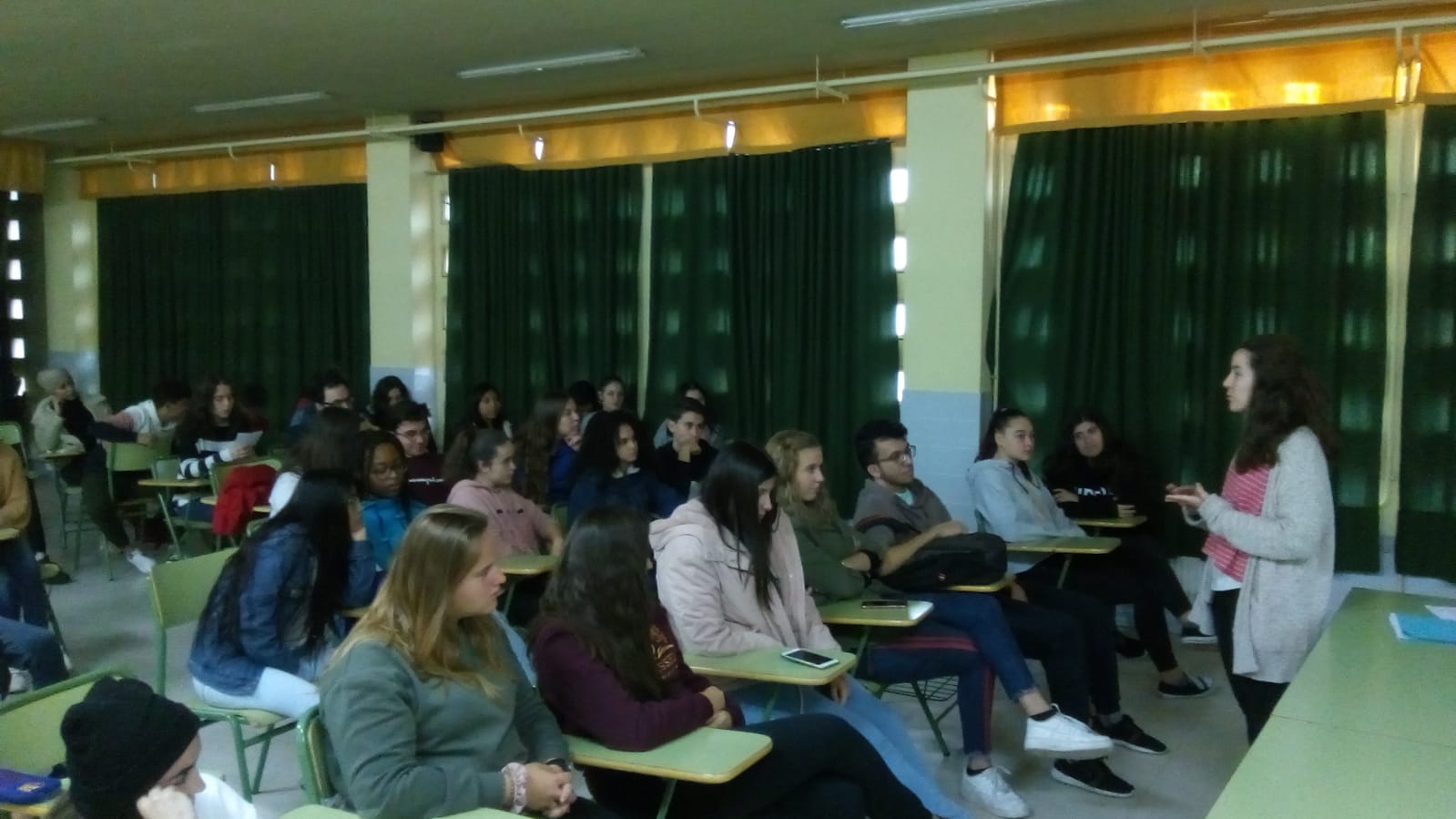
GAMIFICATION · fotografía del archivo original de actividades y encuentros.
Logotipo del proyecto gamification

Introduction

GAMIFICATION · ICT to Play and Play to Learn se desarrolló entre 2016 y 2018 con una pregunta práctica: cómo utilizar las dinámicas del juego y las tecnologías digitales para mejorar la motivación y el aprendizaje. AIDEJOVEN coordinó la cooperación entre entidades de España, Italia, Polonia y Turquía, con propuestas adaptadas tanto al trabajo educativo como a la participación juvenil.

El proyecto tuvo dos itinerarios de formación conectados: profesionales de juventud que diseñaron experiencias educativas gamificadas y jóvenes que aprendieron a crear juegos y aplicaciones. En Parla, el IES El Olivo acogió talleres de prototipado con Marvel App y sesiones de gamificación. En los cuatro países se publicaron experiencias sobre matemáticas, idiomas, lectura, convivencia, emociones, reciclaje y autonomía personal.

El trabajo se recogió en una guía metodológica en cinco idiomas y en un catálogo de experiencias de profesionales y jóvenes. Los resultados se compartieron en el evento final de Madrid, el 27 de junio de 2018, y después en el IES El Olivo, donde se entregaron diplomas y certificados Youthpass. La comunicación del evento final informó de la participación de 39 profesionales de juventud y 27 jóvenes.

Who it is for

Youth professionals, education staff and organisations working with young people, alongside young people interested in learning programming and creating educational tools. The call for young participants was aimed at people aged 15 to 29 and encouraged teams with different levels of digital skills. Local activities were also adapted for under-18s and young people with hearing impairments or receiving care through protection services.

Objectives

  • Prepare professionals to design, deliver and evaluate learning experiences using gamification.
  • Introduce young people to coding, prototyping and the collaborative creation of educational games and applications.
  • Apply these tools to specific needs: motivation at school, language learning, living together, daily habits and inclusion.
  • Share methods and results across the four countries through a multilingual guide, a catalogue of experiences and dissemination activities.

Qué se ha desarrollado

  1. Surveys and logo competition

    The organisations surveyed professionals and young people to learn about their needs, motivation and relationship with technology. An international logo design competition was also held. The winning design, Gami-Pac-Mation, by Adrian Wiśnios from Poland, became the project's visual identity.

  2. Youth professional training

    The programme combined Kevin Werbach’s gamification course at the Universidad de Pensilvania, video conference seminars and the design of a gamified experience. Between May and July 2017, participants worked on non-formal education, competences and activity design. They shared and put their proposals into practice, then evaluated the results.

  3. Programming and teamwork with young people

    The youth training covered gamification, project management and Android app development using App Inventor. The published programme comprised 96 hours: 32 hours of training and 64 hours of development. The teams brought together participants with different levels of experience. Scratch training with teenagers in protective care was also documented in Turquía.

  4. Prototyping and gamification workshops in Parla

    IES El Olivo hosted workshops led by Ismael Ortiz of Touristfy on 30 January and 6 February 2018, in which students turned their ideas into navigable prototypes using Marvel App. On 13 and 20 February, Vega Pérez-Chirinos Churruca led sessions on game mechanics and their application to educational projects.

  5. Design and implementation of educational experiences

    Professionals and young people created projects on programming, mathematics, languages, physics, first aid, reading, recycling and emotional education. Other proposals addressed classroom cooperation, living together, accessibility for deaf people and self-care habits. The full catalogue of experiences published by the participants is provided below.

  6. Methodological guide and shared materials

    The cooperation produced a guide to gamification and its educational application, available in Spanish, English, Italian, Polish and Turkish. The documentation provides insight into the working approaches and experiences developed. The materials were disseminated alongside the project catalogue and activities presenting the results.

  7. Five international coordination meetings

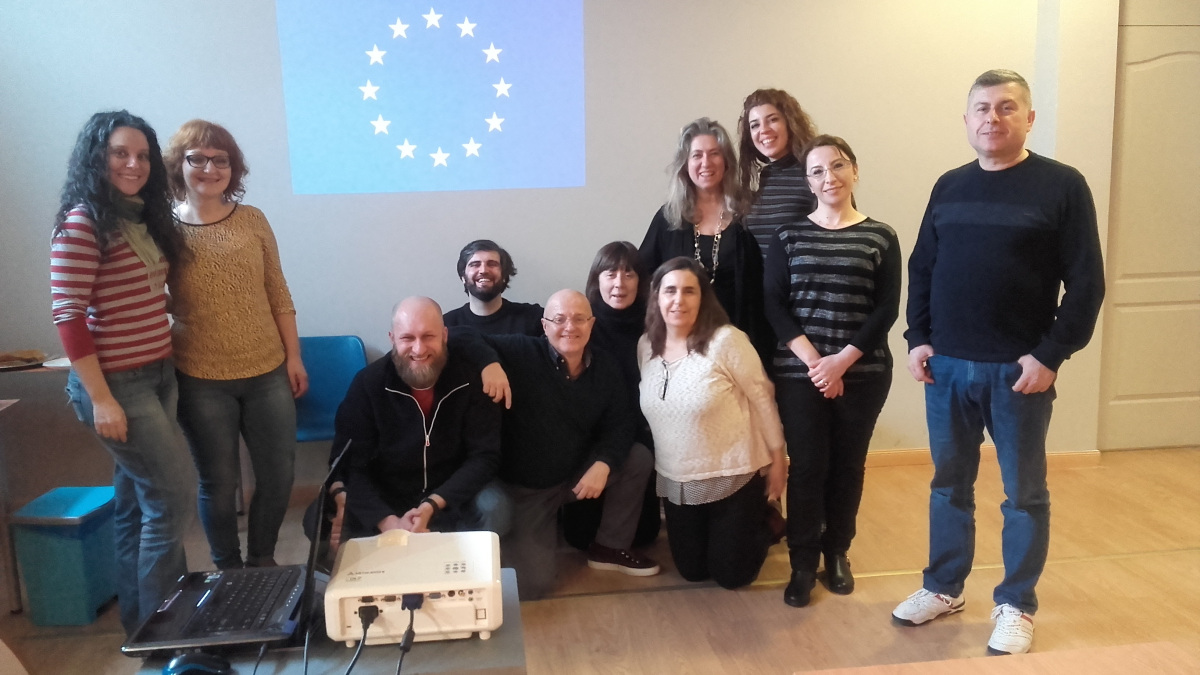
    The organisations met in Varsovia in October 2016, Madrid and Parla in February 2017, Vasto in October 2017, Ankara in March 2018 and Madrid in June 2018. These meetings helped organise the training, review participants' projects, learn about the organisations' work and prepare the guide and final dissemination activities.

  8. Final presentation, diplomas and Youthpass

    On 27 June 2018, the results were presented in the European Room of the Oficina del Parlamento Europeo en España in Madrid, with demonstrations and exchanges between participants and specialists. On 23 November, another dissemination activity was held with two groups of first-year Bachillerato students from IES El Olivo, and diplomas and Youthpass certificates were presented.

Project experiences

«GAMIFICATION ICT to Play and Play to Learn» MULTIPLIER EVENT

AIDEJOVEN brought together professionals, young people and organisations at the European Parliament Office in Spain to share the methodology and experiences of the Gamification project.

Read the experience
Evento de difusión en el IES El Olivo

Dissemination event at IES El Olivo

Today, 23 November 2018, we held a dissemination event at IES El Olivo in Parla. Two first-year Bachillerato classes and the school’s headteacher, Andrés García, attended the event.

Read the experience

Experiences created by participants

The published catalogue brings together the following proposals from youth professionals and young people in the four countries. Each addresses a specific educational need. Some of the youth-led applications develop ideas also explored by the professionals.

Youth professionals’ proposals
  • Spain

    Programming Our Games

    A system of challenges and levels through which children learn programming by creating their own games. It adapts and expands the CoderDojo model with the «Ninja Tour» pathway, new technological challenges, a collection of cards as a weekly reward and a template for assessing achievements. It has been used in a coding club since October 2017.

  • Spain

    Mathematics Space

    A game designed to change the idea that maths is difficult and boring. Each daily exercise earns points and ‘weapons’ to tackle exams, the main enemy; defeating them allows players to achieve their goals. It aims to motivate pupils to study, do their homework and improve their results throughout the school year.

  • Spain

    Escape Room

    Mysteries, challenges and missions that students solve using cooperative learning techniques to find the combination that opens a box containing «La Fuerza». The aim is to incorporate these techniques into the classroom and establish working routines that can be applied to other subjects.

  • Turkey

    Avatar’s Inside Our Emotions

    A virtual game based on Theory of Mind tests to help children aged 7 to 12 in institutional care learn to recognise emotions. It has three progressive stages—real faces, situations and personal interpretation—and was used with 20 children, who then evaluated the game through a questionnaire.

  • Turkey

    Young Voluntary Inspectors

    A two-part game to teach road safety rules to children, the ‘drivers of the future’: first, an animated video in which they earn points, followed by questions about road signs. Those who answer correctly receive a ‘traffic inspector ID card’.

  • Turkey

    We Are Recycling

    A proposal to teach children how to sort waste and return recyclable materials to the manufacturing process, in response to the depletion of natural resources. It is aimed at children aged 7 to 12 supported by the Dirección Provincial de Familia y Políticas Sociales de Ankara and uses a game developed in Scratch.

  • Turkey

    Jigsaw Reading

    Reading content on history, science and literature within a game featuring avatars, levels and puzzles.

  • Turkey

    Regular Life

    Challenges and keys to progress for developing self-care habits and everyday living skills with children in care.

  • Poland

    Stay on the Top!

    An initiative with a group of 20 secondary school students to strengthen their aspirations, self-confidence and engagement. It uses an activity chart, bonuses, daily work records and prizes, with a game schedule that is monitored and adjusted during implementation.

  • Poland

    I’m OK

    A month-long game for a group of six deaf eight-year-olds, designed to reduce aggression and reinforce positive behaviour. Each day, they look after a secret friend and move around a circular board when they demonstrate helpful behaviour; feedback from pupils and teachers was very positive.

  • Poland

    Real Beauty Is Inner Beauty

    Activities to promote kindness and empathy and prevent bullying among pupils with hearing impairments.

  • Italy

    First Aid Online Course

    A mobile app offering a first aid course organised into levels of increasing difficulty, each linked to an emergency situation. It combines videos and game elements, takes no more than three months to complete and also aims to spark young people's interest in volunteering.

  • Italy

    Sports and Physics. That’s the Game!

    A mobile game with levels that presents physics problems based on sporting situations, such as calculating the power and angle of a penalty kick. It combines the subject pupils find most difficult with the one they find most appealing, physical education, using a practical and cooperative STEM approach.

  • Italy

    Dante for Right Grammar

    A game with levels in which Dante Alighieri travels to the present day to help correct the most common Italian grammar mistakes. Videos featuring a story starring Dante and a boy called Mario are combined with progressively harder quizzes to support teachers.

  • Italy

    Learn Languages with ICT

    “Play to learn Languages” proposes a website or mobile app with logic and programming games to improve basic English. It recognises that English is the most common language in ICT and uses traditional gamification elements to support learning.

Young people’s proposals
  • Italy

    Sports and Physics. That’s the Game!

    A mobile game with levels that presents physics problems based on sporting situations, such as calculating the power and angle of a penalty kick. It combines the subject pupils find most difficult with the one they find most appealing, physical education, using a practical and cooperative STEM approach.

  • Italy

    Emergency Room · First Aid Online Course

    A mobile app offering a first aid course organised into levels of increasing difficulty, each linked to an emergency situation. It combines videos and game elements, takes no more than three months to complete and also aims to spark young people's interest in volunteering.

  • Italy

    Citizen of the World

    A mobile app that uses gamification to teach languages, including Latin and Greek, and help users learn about other cultures. It aims to make it easier for young people to live and travel abroad, increase their interest in cultural diversity and promote active European citizenship.

  • Spain

    Land of Maths

    An app for learning maths through play, aimed at students in the fourth year of ESO, to make the subject more appealing. Each correct answer earns 10 points and each completed level awards a badge, creating a rewards system that sustains motivation and encourages continued learning.

  • Italy

    Dante for Grammar

    A game with levels in which Dante Alighieri travels to the present day to help correct the most common Italian grammar mistakes. Videos featuring a story starring Dante and a boy called Mario are combined with progressively harder quizzes to support teachers.

  • Poland

    World of Silence, Education

    A gamified app designed to motivate people with hearing impairments to learn Polish, intended for the Asociación Polaca de Sordos website. The team prepared specific questions to get to know the community and adapt the tool to its needs.

  • Turkey

    Application design with Scratch

    Training and app development with adolescents in care, including an assessment of the knowledge acquired.

  • Spain

    Nocrida

    An app to consolidate knowledge of history: each section summarises a period and asks questions about the text, and users can only move on by answering correctly. It includes a forum, ranks and achievements designed for different player profiles (socialisers, achievers and competitive players).

Galería · 63 imágenes

Project participants featured in the publication of the initial surveys.
Poster for the international logo design competition · 2017.
Presentation of proposals during training for professionals from Spain and Italy · July 2017.

1 · 2 · 3 / 63

GAMIFICATION · ICT to Play and Play to Learn

Watch on YouTube

Entidades y financiación

European Union, Erasmus+ programme. Reference 2016-2-ES02-KA205-008528.

Coordina

Funded by

Entidades socias

Documentación y novedades

Gamification · ICT to Play and Play to Learn

New educational methodologies: Non-formal education and gamification

A methodological guide to gamification with examples of good practice in the youth sector. Resources for incorporating play and non-formal education into learning processes.