All our projects

AIDE Formación · AIDE Social

Intervención Socioeducativa · Proyectos Europeos

Recognize, Remedy and Re-Engage

Executive summary

Educational cooperation from 2015–2017 to prevent disengagement and school dropout. It combined cooperative learning, multiple intelligences and tangible user interfaces, trained professionals in Spain and Malta, and applied the methods in five European schools, with a guide available in four languages.

Status
Completed
Period
Erasmus+ 2015 call · Implementation 2015–2017
Area
Spain and participating European countries
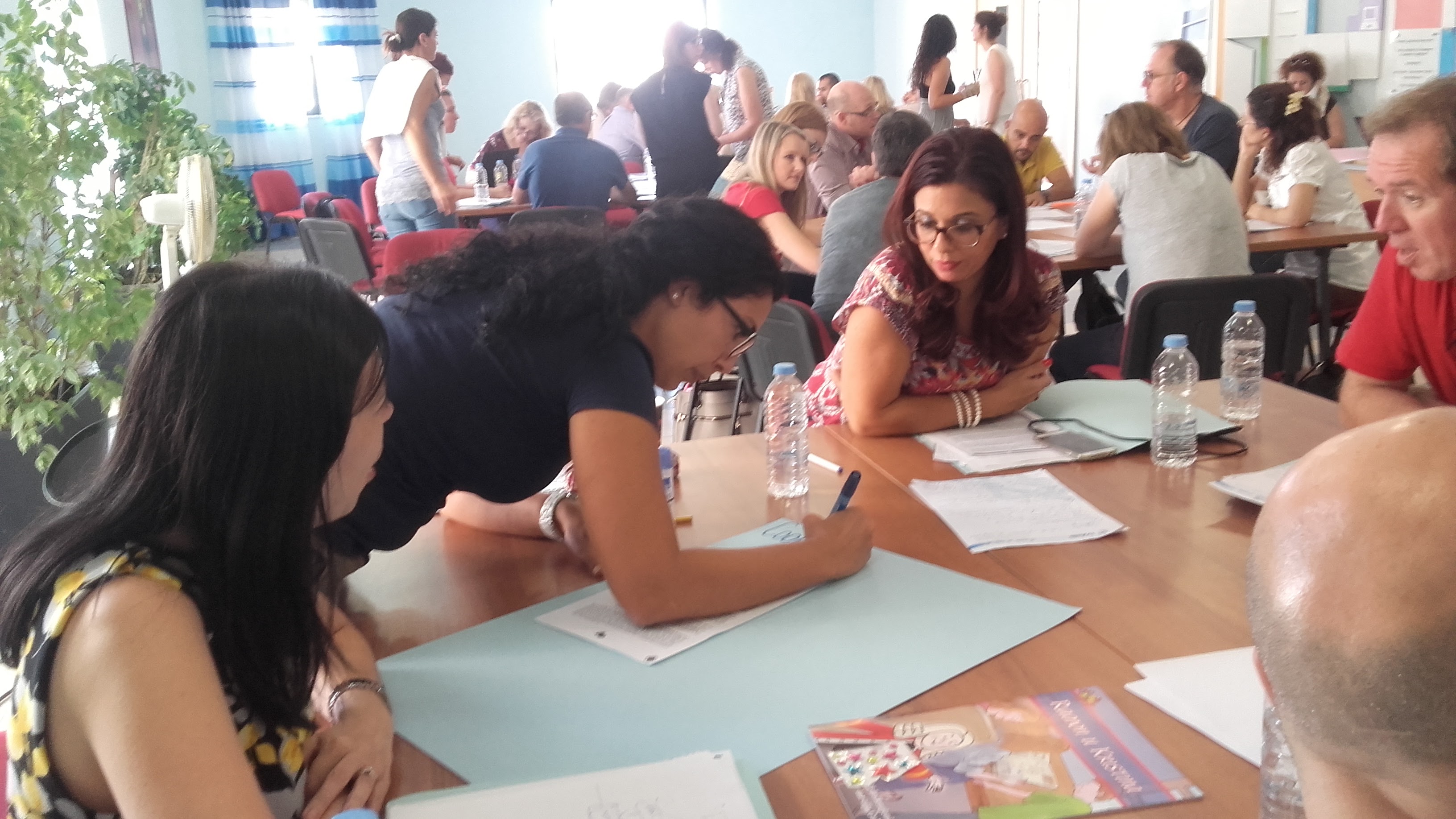
Re-Engage · sesión de trabajo con las entidades socias del proyecto
Recognize, Remedy and Re-Engage

Introduction

Recognize, Remedy and Re-Engage buscó reconocer las dificultades del alumnado y mejorar su vinculación con la escuela. Coordinado por LIST en Luxemburgo, reunió a entidades educativas y sociales y a cinco centros de Luxemburgo, Bélgica, Letonia y Malta.

El proyecto combinó aprendizaje cooperativo, inteligencias múltiples e interfaces tangibles de usuario. AIDEJOVEN aportó la metodología cooperativa; el Institut Sainte Marie de Châtelineau, el enfoque de inteligencias múltiples; y LIST, herramientas tecnológicas para aprender mediante la interacción con objetos y entornos compartidos.

La formación de Madrid reunió a 42 profesionales y las metodologías se implantaron en cinco centros. Hubo una segunda formación en Malta y encuentros de seguimiento en varios países. La guía final y las presentaciones recogen herramientas de diagnóstico, organización del aula y propuestas para prevenir el abandono escolar temprano.

Who it is for

Teachers, education teams and socio-educational professionals working with pupils at risk of academic failure, absenteeism or early school leaving.

Objectives

  • Identify learning, participation and relationship difficulties that can contribute to disengagement from school.
  • Expand ways of learning through cooperation, multiple intelligences and tangible interaction tools.
  • Train professionals and compare how the methodologies are applied in centres in different countries.
  • Share a guide and practical resources to prevent early school leaving.

Qué se ha desarrollado

  1. Kick-off meeting in Luxembourg

    The meeting on 20 and 21 October 2015 provided an opportunity to organise the project and learn about LIST’s tools, including tangible user interfaces and interactive learning environments.

  2. Assessment and educational planning

    The approach examines learning difficulties and relationships within the classroom. The cooperative methodology incorporates tools such as sociograms, preference rankings, intergroup attitudes and the identification of different abilities.

  3. Training for 42 professionals in Madrid

    The course was held from 25 to 29 January 2016 in Fuenlabrada, with a transnational meeting on 28 and 29 January. Participants explored cooperative learning, multiple intelligences and new educational tools, with professionals from partner countries and collaborating organisations taking part.

  4. Cooperative learning · AIDEJOVEN’s contribution

    The programme addresses group organisation, interdependence, participation and relationships in the classroom. The presentations document tools for getting to know the group and designing cooperative activities adapted to its needs.

  5. Multiple intelligences and tangible interfaces

    Institut Sainte Marie contributed ways to diversify learning based on multiple intelligences. LIST developed the TUI/Microworlds technology component, connecting objects, action and shared learning environments.

  6. Follow-up in Latvia and second training session in Malta

    The 2016 meeting in Latvia provided an opportunity to review the work. The training in Malta took place from 24 to 28 October in Kirkop and Mosta, alongside a transnational meeting on 27 and 28 October.

  7. Implementation in five educational institutions

    The methodologies were implemented at Marie Consolatrice in Luxembourg, Institut Sainte Marie in Belgium, Viesite Secondary School in Latvia, Maria Regina College in Mosta and St Benedict College in Kirkop, Malta.

  8. Review in Belgium and final guide

    The meeting in Châtelineau on 24 and 25 April 2017 provided an opportunity to review implementation. The guide brings together the tools and methodological approaches and is available in Spanish, English, French and Latvian.

  9. Joint dissemination event in Madrid

    On 30 May 2017, experiences and materials were presented. The press release reports that around 50 people attended an event jointly organised by Re-Engage, Yourhythm and PROVYP; that figure refers to the joint event.

Galería · 39 imágenes

Re-Engage · kick-off meeting and demonstration of tangible interfaces · Luxembourg, 2015.
Re-Engage · project working meeting in Latvia, 2016.

1 · 2 · 3 / 39

Entidades y financiación

European Union · Erasmus+ programme. AIDEJOVEN participates as a partner organisation. Coordinated by: Luxembourg Institute of Science and Technology · LIST. The DGSSIS of the Comunidad de Madrid participated as a partner organisation. The 42 professionals relate to the training held in Madrid in January 2016; the figures for the joint event in May 2017 are not attributed exclusively to Re-Engage.

Coordinates

Funded by

Entidades socias

Documentación y novedades

Recognize, Remedy, Re-Engage · RE-ENGAGE

New educational methodologies and strategies to prevent early school leaving

A guide for teachers with diagnostic and intervention tools, cooperative learning, multiple intelligences and tangible user interfaces to prevent early school leaving.