All our projects

AIDE Social · AIDE Impacta

Intervención Socioeducativa · Consultoría Estratégica

CM Educando en Tolerancia y Valores Democráticos

Executive summary

A programme to prevent discrimination and improve relations in educational settings through diagnosis, planning and evaluation. AIDEJOVEN championed the UNE 0071:2021 Specification and supports its implementation through consultancy, training and support tools, distinguishing advisory services from independent certification.

Status
In progress
Period
Ongoing programme since 2020, with activities published up to 2026
Area
Comunidad de Madrid
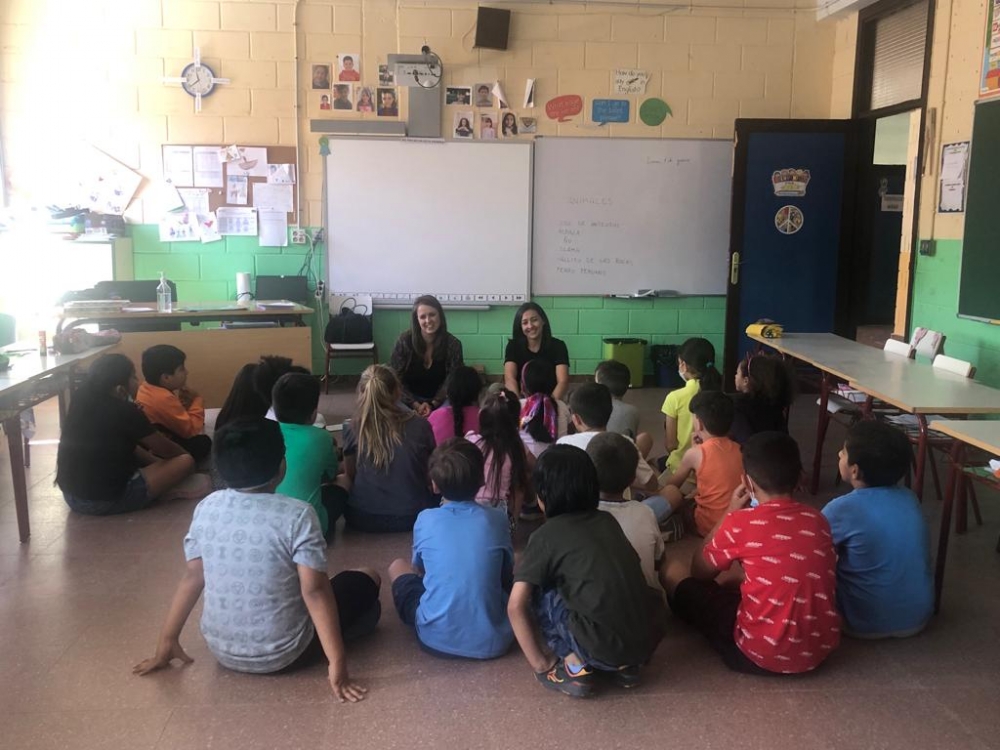
Sesión del programa Educando en Tolerancia en un aula
Red Madrid Tolerante · identidad del programa CM Educando en Tolerancia

Introduction

CM Educando en Tolerancia y Valores Democráticos ayuda a los centros educativos a convertir la convivencia en un trabajo organizado: conocer qué ocurre en las aulas, acordar objetivos y comprobar si las medidas funcionan. Participan alumnado, profesorado, equipos directivos, personal no docente y familias.

El proyecto, promovido por AIDEJOVEN, impulsó la Especificación UNE 0071:2021, elaborada en el CTN 165/GT 9 con entidades públicas, centros educativos, organizaciones sociales y profesionales. La Red Madrid Tolerante, la guía de implementación y las herramientas en línea apoyan su aplicación.

El acompañamiento combina diagnóstico del clima social, consultoría y formación, integrados en el Plan de Convivencia y la Programación General Anual del centro. Incluye seguimiento, evaluación y mejora continua. AIDEJOVEN presta el asesoramiento; AENOR realiza la certificación independiente cuando el centro supera la evaluación correspondiente.

Who it is for

Non-university educational institutions in the Comunidad de Madrid, including primary, secondary, vocational, special and adult education centres. The initiative involves the entire educational community and pays particular attention to students who are vulnerable or at risk of exclusion due to their origin, migration or refugee status, physical or cognitive disability, gender, sexual orientation or financial difficulties.

Interested centres can request information and consider joining the programme.

Objectives

  • Integrate tolerance, equal opportunities and the prevention of discrimination into the centre’s organisation.
  • Identify needs related to community relations and guide actions tailored to their context.
  • Help centres maintain monitoring and improvement procedures, with the participation of the educational community.

Cómo se trabaja con los centros

  1. Assessment of the social climate

    The centre’s plans and activities are reviewed, and the views of pupils, teaching staff, families and other staff are gathered. Surveys and classroom climate analysis tools, including Co-Emotions where appropriate, help identify needs and situations of risk.

  2. Organisation of the management system

    The tolerance policy, responsibilities, resources and working procedures are defined. The aim is to ensure that living and working together is supported by clear responsibilities, shared guidelines and evidence to review what has been done.

  3. Objectives and work plan

    The assessment leads to objectives and actions tailored to the school. The system is integrated into the School Coexistence Plan and the Annual General Programme, building on and organising the work already carried out by the school community.

  4. Training and participation

    Tolerance, gender equality, diversity, communication and discrimination prevention are addressed with professionals, pupils and families. Red Madrid Tolerante and good practice events provide opportunities for centres to share experiences.

  5. Monitoring and continuous improvement

    Activities are monitored, indicators are reviewed and results are evaluated to agree improvements. The process allows measures to be adapted to identified needs and ensures ongoing support.

  6. Preparation for assessment and certification

    AIDEJOVEN supports implementation and the preparation of documentation and evidence. AENOR is responsible for the external audit and certification as a Tolerant Educational Centre, which depends on passing the system assessment.

Trayectoria y experiencias del proyecto

  1. 2021 · Publication of UNE 0071 Specification

    The work promoted by AIDEJOVEN and carried out within CTN 165/GT 9 resulted in a common framework for organising and evaluating tolerance management in educational institutions.

  2. 2023 · First certifications

    AENOR awarded the first certifications to CEIP Seis de Diciembre, CEIP Giner de los Ríos, IES Villa de Valdemoro and IES Villablanca. The certificates were presented at the I Good Practice Event organised by AIDEJOVEN.

  3. 28 April 2026 · III Good Practice Event

    The third Good Practice Conference on Managing Tolerance was held in the Sala Europa at the European Parliament in Madrid. Thirteen schools shared their initiatives on participation, emotional education, inclusion, equality, solidarity and coexistence. The event recognised eight schools that had obtained AENOR certification for the first time and five that had renewed it. The experiences of all the schools are presented below.

Good practices in educational institutions

The initiatives presented at the III Jornada show different ways of bringing tolerance into everyday life at the centre. Each experience offers its own approach, and all form part of the shared work of Red Madrid Tolerante.

CEIP Pinocho · Torrejón de Ardoz

Consejo de la Infancia and Plan de Mediadores

Representatives from each primary school class put forward proposals on the school's activities, operation and shared spaces. The Mediators' Plan involves volunteer pupils who help resolve disagreements during break times through dialogue. Both initiatives strengthen listening, participation and shared responsibility.

CEIP 6 de Diciembre · Torrejón de Ardoz

Mejoramos aprendiendo emociones

Students learn to identify, express and regulate their emotions to improve relationships in the classroom. The approach develops empathy, communication and peaceful conflict resolution, with the aim of creating a safer, more inclusive and respectful environment.

CEIPSO Velázquez · Fuenlabrada

Our school garden

Planting, caring for, observing and maintaining the garden become shared learning activities. Working with nature provides opportunities to practise patience, responsibility, cooperation and respect for diversity, as well as environmental care and conflict resolution.

IES Villablanca · Vicálvaro

Más que palabras: an experiential exhibition on dyslexia

An interactive exhibition with 24 stations helps pupils, teachers and families learn about dyslexia. Coordinated by Tolerancia and PROA+, with Year 13 Psychology students and volunteer teachers, it offers visitors a chance to experience reading and writing difficulties, learn about strengths and dispel myths. Its travelling format allows it to be shared with other schools.

IES Luis Vives · Leganés

Juntos y Revueltos: open to learning and cooperation

Since the 2018–2019 academic year, IES Luis Vives and CPEE Alfonso X el Sabio have shared workshops in hairdressing, beauty, sport, gardening, ceramics and other creative activities. Young people with different abilities spend time together, collaborate and build relationships that help overcome social and educational barriers.

IES Benjamín Rúa · Móstoles

Solidarity that transforms. We are a community

The experience brings together three strands: play and living together, solidarity campaigns and emotional wellbeing. It includes sport, shared breakfasts, escape rooms, anti-bullying activities and spaces for dialogue, alongside campaigns with Cruz Roja, the food bank, CRIS contra el cáncer and Desafío ELA. Students turn solidarity and empathy into concrete action.

IES Hotel Escuela · Madrid

Sisterhood and the prevention of violence against women

Visual messages and awareness-raising activities created by students address gender-based violence, self-esteem, freedom and respect. The initiative promotes mutual support, more equal relationships and the importance of not remaining silent in the face of violence.

IES Alfonso Moreno · Brunete

Celebrating diversity: interviews for Disability Day

Through interviews linked to Radio Gerda Taro, pupils reflect on inclusion, equal opportunities and prejudice. The school radio format gives the school community a voice and helps them recognise each person’s abilities, dignity and uniqueness.

IES Santiago Rusiñol · Aranjuez

Recreos para tod@s

Break time caters for different interests and needs through library activities, board games, English conversation, chess, sport, gardening, sustainability, crafts and creative writing. There is also 3D printing, robotics and a music band. The variety of activities encourages participation, prevents conflict and gives every student a sense of belonging.

CEPA Ramón y Cajal · Parla

European projects and art: a path to tolerance

The experience combines a European outlook with creativity and values education. European projects introduce students to other cultures and ways of life, while art offers a common language for connection, expression, participation and respect for diversity.

CEPA Oporto · Madrid

Gymkhana for tolerance and diversity

Students work in teams to complete challenges on empathy, diversity, rights and personal commitment. The activity trail is organised into the stations «Put Yourself in My Shoes», «The Invisible Line», «Diverse Carabanchel», «The Tolerance Traffic Light», «Rights at Play» and «Our Commitment», exploring how to live together in an active and relatable way.

CEPA Casa de la Cultura · Getafe

ReTIClando la letra escrita

Plan Lector brings together reading, writing, literary creation and digital competence. Students produce collaborative texts, ballads, reading recommendations and digital materials, develop their spoken and written expression, and share their work. Culture thus becomes a means of promoting participation, self-esteem and inclusion.

CEPA Pozuelo de Alarcón

Erasmus, Bibliotherapy and CEPAIncluye

Its Erasmus project, recognised by SEPIE in 2023 for its contribution to inclusion, provides European work placements for learners with fewer opportunities, including students on Basic Vocational Training courses and at the Taller Operativo for people with intellectual disabilities. In Biblioterapia, learners recommend and ‘prescribe’ reading; CEPAIncluye organises monthly activities on inclusion, linguistic diversity, women and girls in science, and European participation.

Entidades y financiación

2026 edition funded by the Comunidad de Madrid through the 0.7% income tax allocation for social purposes. Fundación «la Caixa» · recognised historical support throughout the programme's history. UNE serves as the standardisation reference and AENOR is responsible for the relevant certification; the advisory and certification roles are distinct.

Ejecuta

Funded by

Technical committee · CTN 165 GT9

AIDEJOVEN promoted the development of the UNE 0071:2021 Specification. The project publication acknowledges the contribution of the following institutions and professionals to the CTN 165 GT9 working group.

Standardisation and certification

UNE is the standardisation body. AENOR awards Tolerant Centre certification where applicable, independently of AIDEJOVEN's advisory services.