All our projects

AIDE Impulsa · AIDE Formación

Empleo · Proyectos Europeos

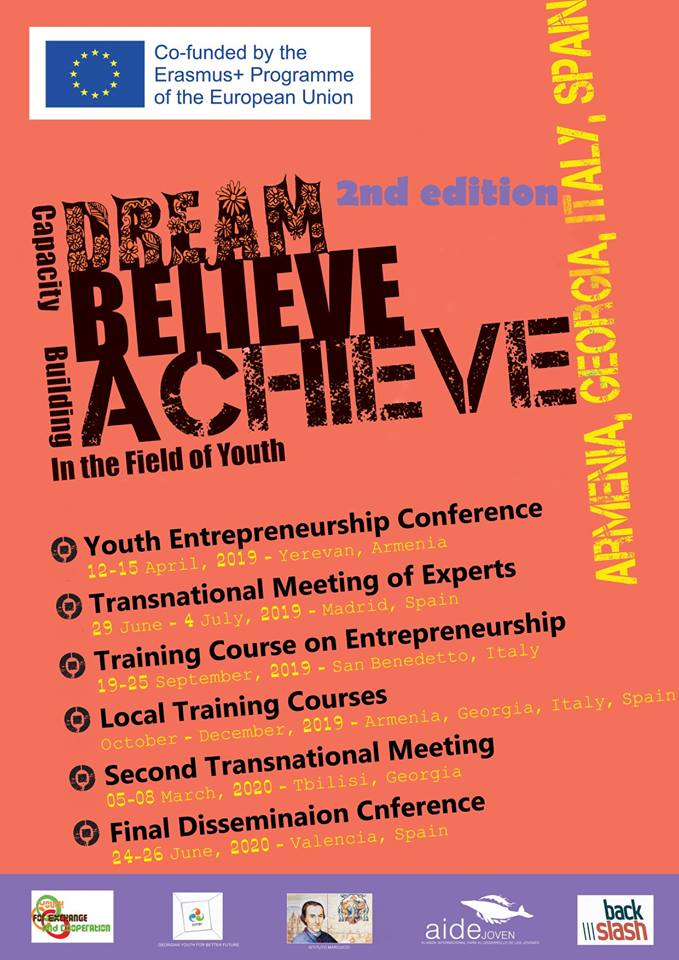
Dream, Believe, Achieve · Second edition

Executive summary

The second edition developed a methodology for preparing, delivering and evaluating entrepreneurship training for young people. It brought together five organisations from four countries and combined expert work in Madrid, international training, local workshops and a joint review in Georgia. Its English-language guide offers tools and activities for other professionals.

Status
Completed
Edition
Second edition
Period
31 December 2018 to 30 December 2021
Area
Armenia, Georgia, Italy and Spain
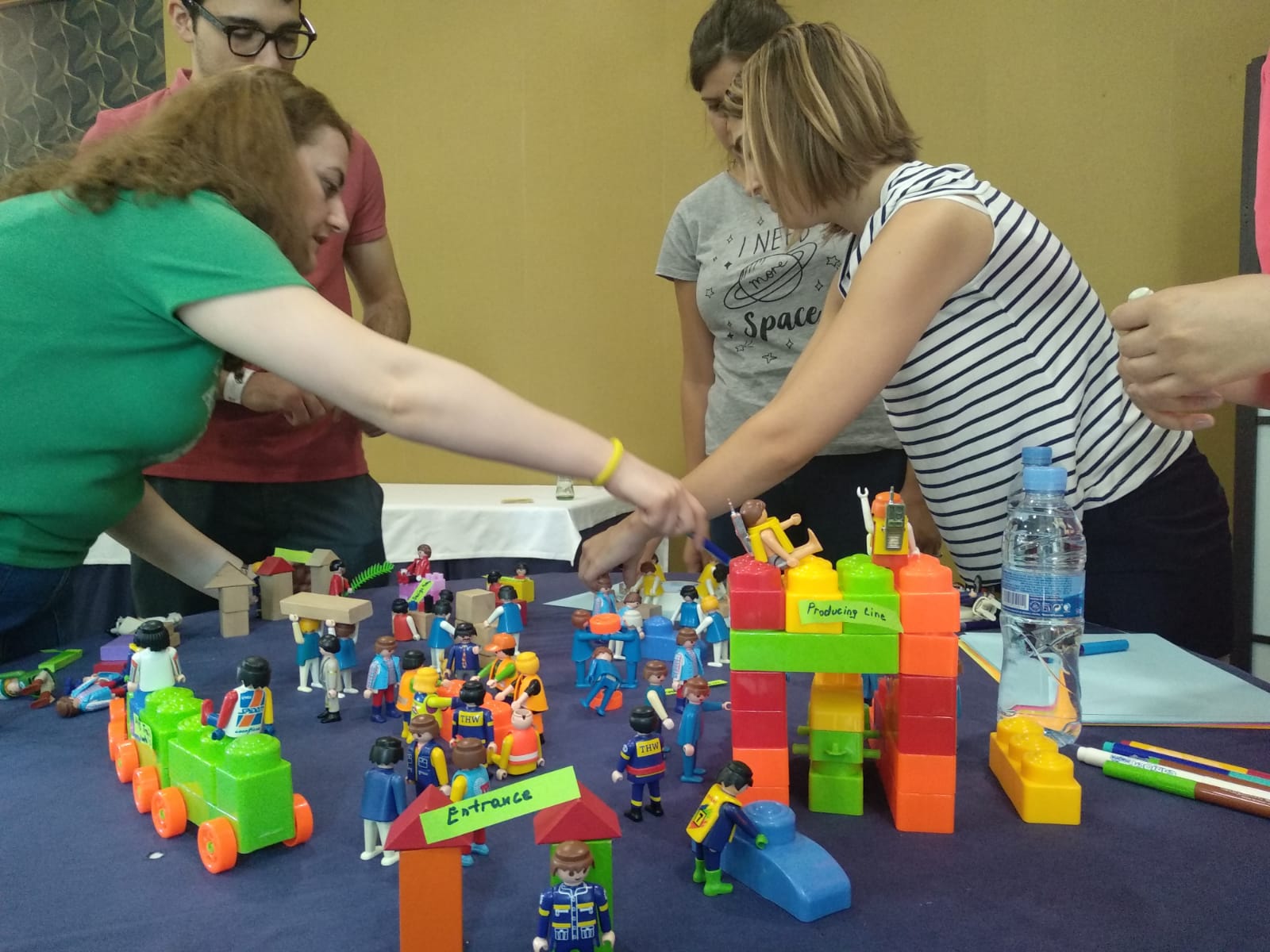
Participantes de la segunda edición en Madrid, 2019.
Dream, Believe, Achieve · Segunda edición · Programa de 2019

Introduction

La segunda edición de Dream, Believe, Achieve convirtió la experiencia anterior en una metodología de formación y evaluación. Se dirigió a profesionales de juventud y a jóvenes con menos oportunidades, con especial atención a los entornos rurales y a quienes afrontaban desempleo o empleo limitado.

El trabajo combinó detección de necesidades, autoconocimiento, diseño de la formación y desarrollo de ideas emprendedoras. Los encuentros internacionales y las aplicaciones locales permitieron revisar herramientas para generar ideas, construir modelos de negocio, crear prototipos y valorar el aprendizaje.

AIDEJOVEN participó como socia y organizó el encuentro de expertos de Madrid de junio y julio de 2019. También desarrolló talleres locales con 23 estudiantes del IES Humanejos de Parla. El resultado principal es una guía en inglés de 116 páginas con orientaciones, ejercicios y recursos para organizar formación emprendedora.

Who it is for

Youth workers, trainers and people preparing entrepreneurship activities for young people. The project focused on young people with fewer opportunities and those from rural areas, and also provided tools for people who wanted to start training their peers.

Objectives

  • Design a methodology that connects the identification of needs with the preparation, delivery and evaluation of training.
  • Develop youth workers’ capacity to support entrepreneurial learning processes.
  • Develop self-awareness, idea generation, business models and prototyping through practical activities.
  • Test the tools with young people and review their usefulness before sharing them with other organisations.

Qué se ha desarrollado

  1. Entrepreneurship conference in Ereván

    The meeting from 12 to 15 April 2019 brought together experiences from the first edition with new participants and specialists. The work focused on identifying needs, comparing lessons learned and preparing the international group that would develop the methodology.

  2. International expert meeting in Madrid

    From 29 June to 4 July 2019, AIDEJOVEN hosted work on the structure of the guide. The programme covered learning objectives, opening sessions, expectations, group management, idea generation and human-centred design, combining presentations with collaborative development tasks.

  3. Business models, tools and prototypes

    In Madrid, participants worked on the Canvas model, value propositions, resources, funding, risks and digital tools. Teams developed prototypes and shared ways to explain and review an idea, along with methods for managing an initiative and evaluating learning.

  4. Visit to Google Campus and learning in the city

    A visit to Google’s space for entrepreneurs introduced the group to Madrid’s entrepreneurial ecosystem. The programme also included a gamified activity around the city, complementing the work done in the sessions and exchanges between participants.

  5. International course in Italy

    From 19 to 25 September 2019, the training took place in San Benedetto del Tronto. This phase prepared participants to apply the methodology with young people and connected the specialists’ work with the organisation of workshops in the participating countries.

  6. Local workshops at IES Humanejos in Parla

    The AIDEJOVEN report documents the experience of a group of 23 students aged between 17 and 25. Design Thinking and Visual Thinking were used to address issues relevant to them —starting a business, finding work or overcoming learning difficulties— and turn them into proposals and forms of visual communication. The sessions were evaluated using anonymous questionnaires.

  7. Methodology review in Tiflis

    From 5 to 8 March 2020, the partners shared their experiences of local implementation in Georgia. The meeting programme and photographs document the review of what had worked, the difficulties identified and the adjustments needed to the methodology and its evaluation.

  8. Methodological guide and final dissemination

    The final meeting in Quart de Poblet, Valencia, provided an opportunity to share the methodology. The English-language guide covers training design, idea generation, Canvas, prototyping, project management, motivation, evaluation and personal development exercises. It includes tools for assessing needs and resources that other professionals can adapt for their groups.

Galería · 29 imágenes

International expert meeting for the second edition · Madrid, June–July 2019.

1 · 2 · 3 / 29

Entidades y financiación

European Union, Erasmus+ programme, capacity building in the field of youth. Reference 602259-EPP-1-2018-1-AM-EPPKA2-CBY-EP-PE. AIDEJOVEN participates as a partner organisation. Coordinated by: Youth for Exchange and Cooperation — YFEC (Armenia).

Coordinates

Funded by

Entidades socias

Documentación y novedades

Dream, Believe, Achieve · Second edition

Dream · Second edition · Training and evaluation

A 116-page guide to designing, organising and evaluating entrepreneurship training. It covers Canvas, Design Thinking, prototyping, evaluation and personal development.